
Rural small businesses in 18 states have new HUBZone areas on the map, and an address that didn't qualify a year ago might qualify today.
On October 22, 2026, the Small Business Administration announced that it has approved 18 governors' petitions since January 2025 to add rural areas to the HUBZone program. Together they add 252 areas. Hawaii, Indiana and Nevada asked for the first time. The other 15 states built on areas their governors had already won: Connecticut, Illinois, Kansas, Louisiana, Maine, Michigan, Mississippi, New Mexico, New York, Tennessee, Texas, Utah, Virginia, Wisconsin and Wyoming. Thirty states now take part.
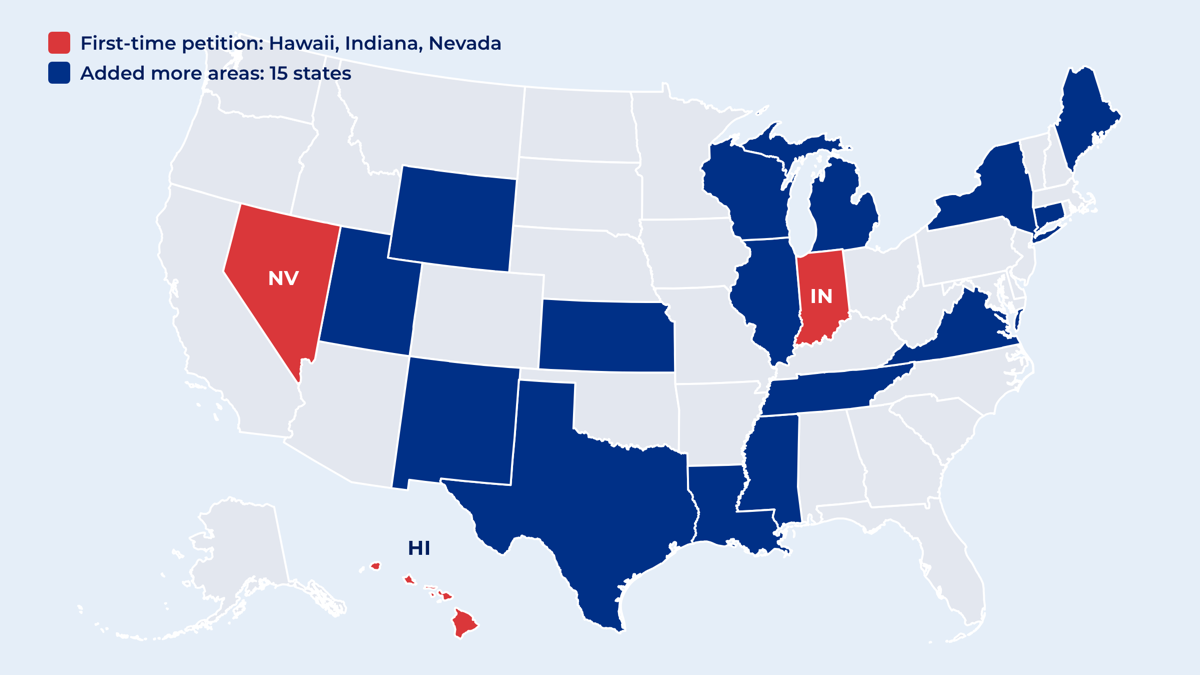
"These new designations will help local manufacturers and suppliers grow, create jobs, and invest in their communities," said SBA Administrator Kelly Loeffler.
HUBZone stands for Historically Underutilized Business Zone. It is one of the main federal contracting certifications, and it steers contracts to small businesses that are based in, and hire from, places the government wants to see more jobs and investment. SBA also said it lined the new areas up with Opportunity Zones where it made sense. Those are low-income communities where investors get federal tax breaks for putting money in for the long term, so a business in one of these areas could benefit from both.
How a governor adds areas
Most HUBZones come from a formula. SBA draws them from census data on income and unemployment, and the map updates on a schedule. Rural areas that just miss the formula have a second route. Under SBA's rules, a governor can petition once a calendar year to add areas that:
- Sit outside an urban area
- Have 50,000 people or fewer
- Have an unemployment rate at least a fifth higher than the national or state average, whichever is lower
A governor can name up to a tenth of the state's qualifying tracts and counties in one petition. SBA then weighs each area on its potential for jobs and investment, whether small businesses there have shown interest, and whether state and local officials have already made it part of their economic development plans.
Approved areas go on SBA's HUBZone map and stay there until SBA's next full map update or one year after approval, whichever is later.
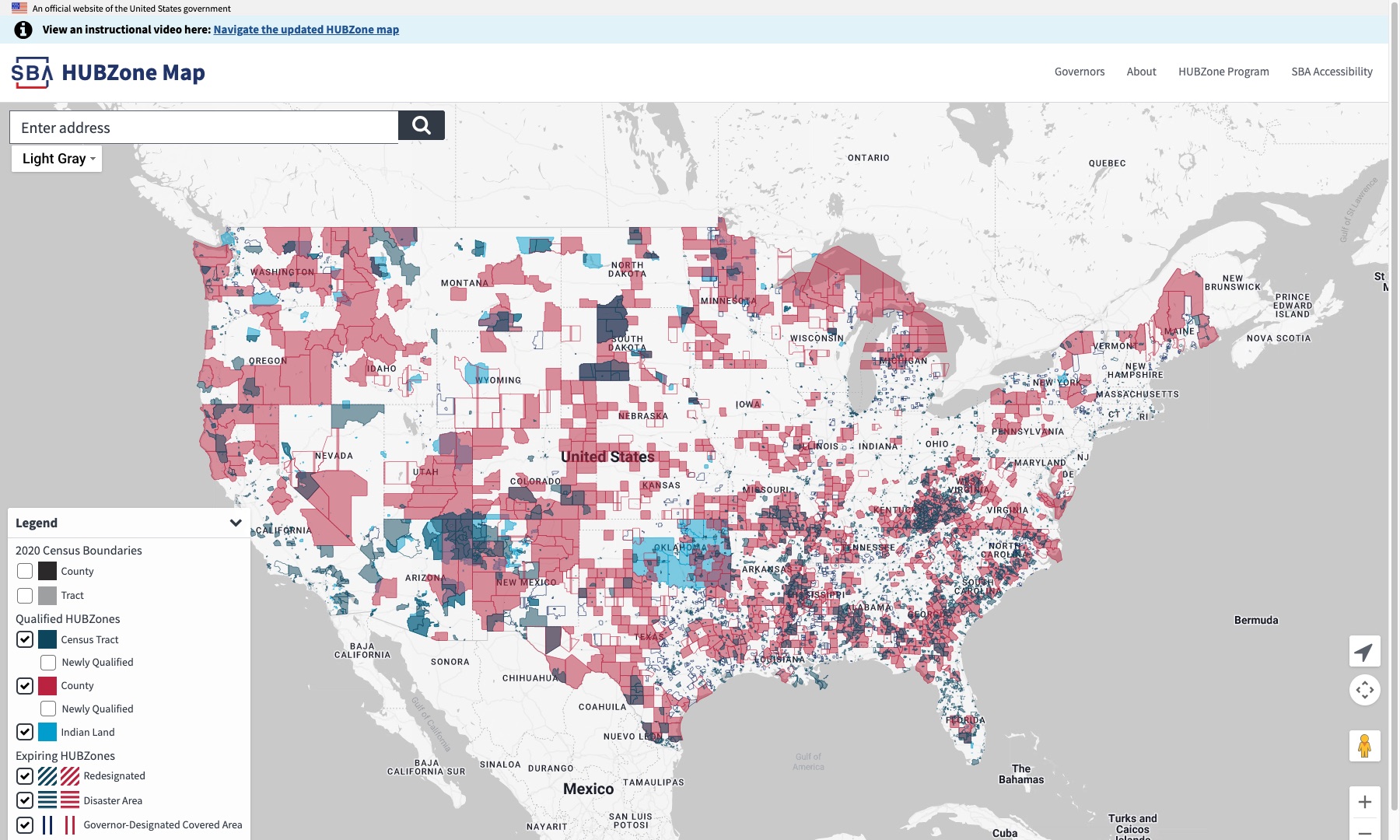
SBA's HUBZone map. Red areas are qualified counties, dark blue are qualified census tracts, light blue is Indian land. Type an address into the search box to see whether it sits inside a HUBZone. Source: SBA, viewed November 2, 2026.
What HUBZone status opens up
Certified HUBZone firms can bid on contracts set aside for HUBZone businesses only, and on some smaller contracts an agency can award to one HUBZone firm without competition. When a HUBZone firm bids against a large business in open competition, it gets a price advantage: the large business's price is marked up before the two are compared.
The federal government also sets a yearly goal for the share of prime contract dollars that go to HUBZone firms. Agencies that fall short have a reason to look for certified firms.
Who qualifies
The new areas move the lines. They don't change the test. To certify, a business must meet all four:
| Requirement | What it means |
|---|---|
| Small | Meets SBA's size standard for its main industry. |
| U.S. owned | At least 51 percent owned and controlled by U.S. citizens. Tribes, Alaska Native corporations, Native Hawaiian organizations, community development corporations and agricultural cooperatives also qualify. |
| Office in a HUBZone | The principal office sits inside a HUBZone. Buying a building there, or signing a lease of ten years or more, can lock that in for up to ten years even if the area later changes. |
| Employees in HUBZones | At least 35 percent of employees live in a HUBZone. Any HUBZone counts, not only the one around the office. |
Certified firms recertify every three years and must tell SBA about a merger or acquisition.
Where firms get stuck
The employee test causes the most trouble. One hire or one move can push a firm below the line. SBA's rules give some room. An employee who lives in a HUBZone for the first 180 days after the firm certifies keeps counting after moving away, up to four such employees at a time. A firm working on a HUBZone contract only has to keep trying to stay at the line while the job runs. Keeping the records to prove all of that, including every address an employee has lived at, is on the firm.
The map moves too. A governor-designated area stays on the map until SBA's next full update or one year after approval, whichever is later. A firm counting on one should know its date.
Who should act
This matters most to rural manufacturers, suppliers and service firms in these 18 states whose address missed the map before, and to any firm in Hawaii, Indiana or Nevada, where governor-designated areas are new. An office or a workforce that sat just outside a HUBZone may now sit inside one.
If you've looked at the map and aren't sure where your business stands, or your HUBZone application stalled or came back declined, talk to a FEDCON advisor. We'll sort out whether your firm qualifies and what's missing, so your time goes into running your business, not sorting through the rules.