If a surety turned your firm down, or capped you below the jobs you want to bid, you have more options now.
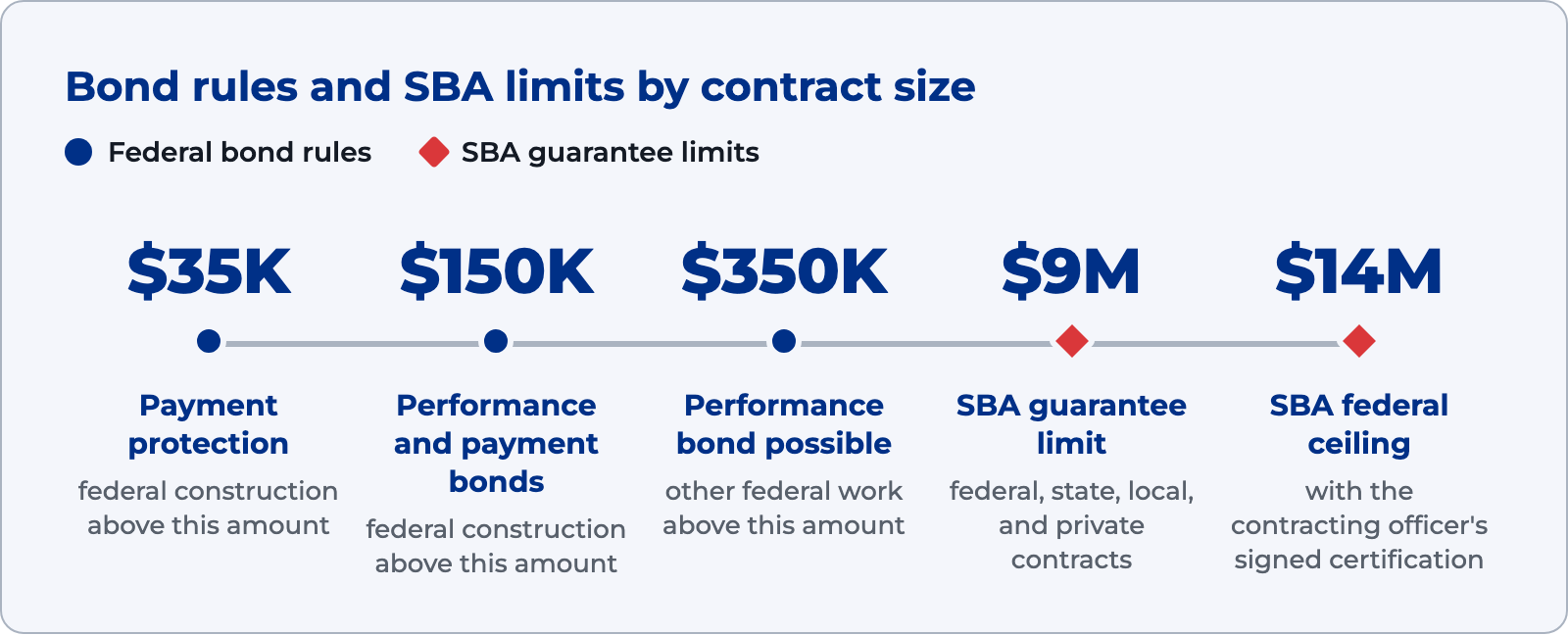
On October 5, 2026, the Small Business Administration announced five surety companies that joined its Surety Bond Guarantee Program during fiscal year 2026. The program backs the bid, performance, and payment bonds small businesses need for many public contracts. It covers contracts up to $9 million, and federal contracts up to $14 million when the contracting officer certifies that SBA's guarantee is necessary.
"Small manufacturers, contractors, and suppliers are essential to rebuilding America's industrial base, but too often they are held back from pursuing major projects because they cannot obtain the bonding those contracts require," said SBA Administrator Kelly Loeffler.
How the guarantee works
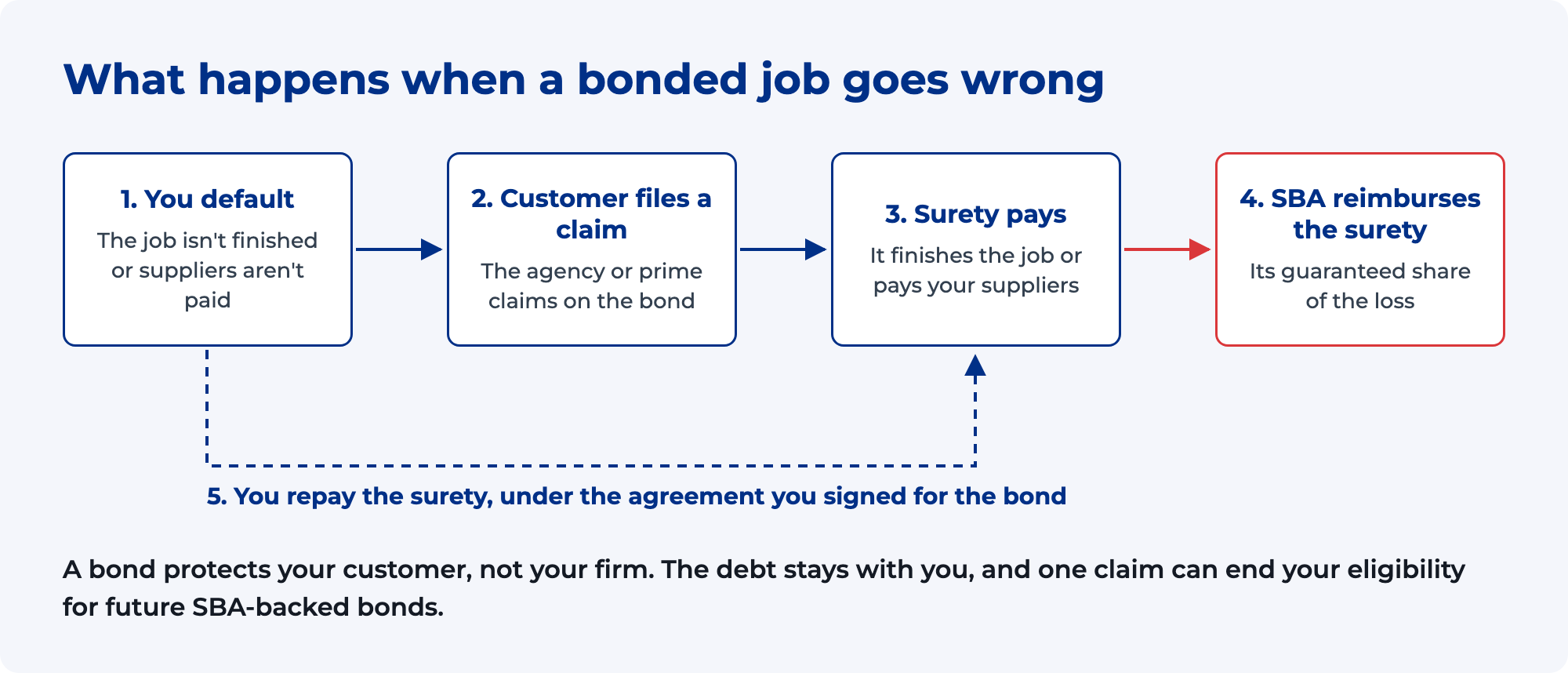
A surety bond is a promise a surety company makes to your customer. If you don't finish the job or pay your suppliers, the surety pays or gets the work done. Many construction contracts can't be bid without one.
SBA's guarantee covers part of the surety's loss if a contractor defaults. That lets sureties in the program bond small businesses "that might not meet the criteria for other sureties," according to SBA.
How the money moves
Up front, your firm pays the surety a premium for each bond. It also pays SBA a guarantee fee on performance and payment bonds, and the surety pays SBA a share of its premium.
The five new sureties
| Surety | Home state | SBA program it joined |
|---|---|---|
| Merchants National Bonding | Iowa | Prior Approval |
| United Fire & Casualty Company | Iowa | Prior Approval |
| RLI Insurance Company | Illinois | Preferred Surety Bond |
| Capitol Indemnity Corporation | Wisconsin | Prior Approval |
| Platte River Insurance Company | Wisconsin | Prior Approval |
The difference is who signs off. A Prior Approval surety needs SBA's approval on each bond before issuing it. A Preferred surety issues SBA-backed bonds on its own, "without further SBA approval," under SBA's rules.
The two Wisconsin companies are both part of CapSpecialty. SBA said they joined to reach more small construction firms and plan to back them "until they have gained additional experience and improved financial standing to qualify for standard surety support."
The guarantee isn't limited to federal work. It also backs bonds on SLED and private contracts up to $9 million, for subcontractors as well as primes.
When a federal contract requires a bond
Construction is where bonds come up most. A federal law known as the Miller Act requires performance and payment bonds on any federal construction contract over $150,000. A performance bond covers finishing the work. A payment bond covers paying your subcontractors and suppliers.
Smaller jobs, over $35,000 and up to $150,000, still need payment protection. The contracting officer lists at least two acceptable forms, such as a payment bond or a letter of credit, and you provide one.
When a performance bond is required, the solicitation usually requires a bid bond too. It promises that if you win, you'll sign the contract and provide the bonds. Don't leave it out. In sealed bidding, the FAR says a missing bid guarantee "requires rejection of the bid," with a few narrow exceptions.
Outside construction, bonds are less common. The FAR says agencies generally "must not require performance and payment bonds for other than construction contracts." Above the $350,000 simplified acquisition threshold, though, a contracting officer may require a performance bond to protect the government. Demolition work and jobs with large progress payments before delivery are two examples the FAR gives. If you manufacture or fabricate, check the bond clauses before you price that kind of job.
The FAR overhaul doesn't move these lines. The FAR Council's proposed rewrite of the bond rules, published September 18, 2026, keeps both the $150,000 and $35,000 thresholds.
Who qualifies for an SBA-backed bond
SBA sets the rules for your business. The surety then decides whether to bond the job.
| SBA requirement | What it means |
|---|---|
| Small business | Your firm and its affiliates meet SBA's size standard for your main industry. |
| A bond is required | The solicitation or contract calls for the bond. |
| No bond without SBA | You can't get the bond on reasonable terms without SBA's guarantee. |
| You do the work | You aren't mainly a broker, and you don't subcontract the whole job. |
| Good standing | You aren't debarred or suspended, and your officers and 20%+ owners meet SBA's character standard. |
Size is measured against your main industry, not the NAICS code on one solicitation. If you're in construction, keep an eye on SBA's proposed size standards, which would replace the revenue test with a headcount test.
SBA guarantees a larger share of the surety's loss on contracts of $100,000 or less. The same goes for bonds for veteran-owned and service-disabled veteran-owned firms, certified HUBZone firms, and firms owned by socially and economically disadvantaged individuals. A bigger guarantee means less of the surety's own money at risk, which can make a yes easier.
What the surety looks at
SBA's guarantee doesn't replace the surety's review. SBA's rules tell sureties to "evaluate the credit, capacity, and character" of each business and to "reasonably expect" it to finish the job.
Capacity covers more than the job in front of them. A surety can ask SBA for a bonding line covering several bonds for one business over up to a year. That line caps your total work on hand, bonded or not, including bids still out.
Smaller jobs take less paperwork. For contracts up to $500,000, a Prior Approval surety can use SBA's Quick Bond option, which needs fewer forms. You can't use it if the job runs longer than 12 months, if you've defaulted or had claims filed against you, or if you started work before the bond was signed.
Where firms get stuck
The bond has to be one the contract requires. You must certify it is "expressly required by the bid solicitation or the original Contract." SBA also won't back commercial bonds, the kind an agency requires to make sure a business follows laws and regulations.
One problem bond can shut you out. Your firm and its affiliates lose eligibility for future SBA-backed bonds if:
- A customer declares you in default on an SBA-backed bond
- Someone files legal action under the bond
- The surety sets aside $10,000 or more for a claim
- You leave an SBA guarantee fee unpaid
SBA can reinstate a firm later, but its next application faces what the rules call "a very stringent underwriting review."
And the size limits are firm. Any federal job over $9 million needs the contracting officer's signed certification. Nothing over $14 million qualifies.
What to do now
Your bonding capacity decides which jobs you can bid. Find out what you can get before the solicitation posts, not after the bid is written.
This news matters most for small construction firms a surety turned down or capped, and for manufacturers, suppliers, and subcontractors bidding work that requires a performance bond. There are now five more sureties inside SBA's program to talk to.
If a solicitation you want calls for a bond and you're not sure your firm can get one, talk to a FEDCON advisor. We'll help you work through it, so your time goes into running your business, not chasing paperwork.